Tag: Subject and object (philosophy)

  • The Strange Confession

    The Strange Confession

    This entry is part 6 of 6 in the series RPG Theory

    THE STRANGE CONFESSION

    There are infinite ways to design games. This is one of them. It is based on the underlying philosophy of the SNAP! SRD by Thought Punks /  Rev Casey. It is opinionated. We encourage you to also shamelessly share your visions. Write your manifestos. Post calls to action. Encourage the art you want to see.

    • We believe the fiction and the structure are one thing with two mouths, not partners, not allies, indivisible.
    • We believe the story must never stop, that stalls are design failure, that every roll must deliver something to hold.
    • We believe genre is gravity, physics, natural law written into the bones of the game.
    • We believe the silliest cartoon nonsense and the most devastating personal drama live at the same table in the same breath.
    • We believe your character’s layers should fight each other and your flaws are the most valuable things you own.
    • We believe relationships are engines and transformation is the point and the knife should always be shown before it cuts.
    • We believe in stealing shamelessly from every tradition that has ever made a room disappear and pledging allegiance to none of them.
    • We believe games are alchemical tools, that imagination does not respect the boundaries we draw around “just playing”, and that you can discover what is to be human with nothing but dice and index cards and a willingness to mean it.

    If that sounds like the work you want to be doing: this is how we work. Come with us.
    A surreal photograph of a woman in a white dress floating in an abandoned attic, capturing a sense of mystery.

    The room is gone. The boundary is gone. You are somewhere else now.

    You are leaning forward and you do not remember leaning forward. Your hands stopped moving. Someone across the table is holding their breath and you can hear it, the absence of air, the held moment before whatever comes next. The fiction swallowed you whole and you went willingly, you went eagerly. Because this is it. This is the thing. This is why you came here and why you keep coming back and why nothing else scratches this particular itch.

    The game is not a game anymore. It never was. It was always a door and you just walked through it.

    We know. We’ve been there. We live there, when we are lucky, when the design works, when everything aligns and the table becomes a crucible and we are remade inside it. We are not interested in passive entertainment. We are interested in active transformation. We are interested in the place where the fiction stops being fiction. And especially where it starts being a tool for cracking yourself open and finding out what lives inside.

    This is the forbidden alchemy. This is what we do. We use games to shatter the walls between the imagined and the lived, between the playful and the profound, between the ridiculous and the sacred. We believe human imagination is vast and wild and does not respect the polite boundaries we draw around “just a game”. We believe the internal worlds we build at tables are real in every way that matters. We design to honor that reality.

    This is not an accident. This is not a gift the dice give when they feel generous. This can be built. This can be made more likely. This is architecture and we are architects. We will share our vision with you because we want you to build it too. Because the more of us who build this way, the more of these moments exist in the world. And we are greedy for them. We are hungry for them. We will never have enough.
    Stunning grayscale image of the Rosette Nebula capturing a celestial star field.

    A critical secret: fiction and structure are not two things.

    We know how this sounds. We know you have been told they are partners, or allies, or that one serves the other. That “fluff” and “rules” live in their own separate universes. Forget that. Burn it.

    The fiction and the structure are the same thing speaking with two mouths. When you feel the weight of a choice in your chest, that weight is coming from both at once, indivisible, one pressure with two names. The story says this matters. The structure says this costs. They are not agreeing. They are being the same thing.

    Design that treats them as separate is a failure state here. The seam is the failure. The gap is the failure. We build until we cannot find the seam anymore. Until you cannot tell where the story ends and the structure begins. Until the question of which matters more becomes incoherent because there is nothing to compare. This is the foundation. We do not argue about this. We do not compromise on this. This is our truth.
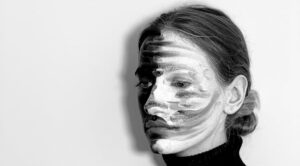
    Black and white of contemplative young female model with painted face in turtleneck standing against light background

    We ride the paradox.

    The same table, the same night, the same breath: You are laughing so hard your sides hurt, You are also learning something true about yourself that you will carry for years. The silly and the serious are not enemies. The casual and the transformative are not opposites. Genres are not distinct buckets.

    We reject the demand to choose between them. We reject all the lies across the spectrum: that depth requires solemnity, that play must be frivolous, that you cannot explore what it fundamentally means to be human through a cartoon duck who fights crime or a vampire who misses their mother or a spaceship crew arguing about whose turn it is to clean the recycler.

    Some of the most profound moments we’ve seen came wrapped in absurdity. The most healing catharsis we felt arrived through fiction so ridiculous we would be embarrassed to explain it to anyone who was not there. On the other side, there are laugh out loud moments enduring years later that came from scenes in otherwise deeply somber games. This is not a bug. This is the feature. Human beings are ridiculous and serious at the same time, in the same breath, and the games that honor both are the games that crack us open widest.

    We are not a school. We are not a movement with an acronym. We do not care whether your inspiration comes from what people would call trad, indie, OSR, or some other perceived niche. We take what works. We steal shamelessly from every tradition that has produced a moment worth stealing from. Approaches over allegiances. Results over tribes. If it makes the room disappear, if it empowers the paradoxes, it belongs to us.
    Blurred motion capture of busy commuters at an İstanbul subway station.

    The story does not stop.

    We refuse to let it. We design to make stillness impossible. Every touch of chance, every reach for a resource, delivers something. Every roll lands somewhere. Every moment opens into the next moment with something new to hold, something new to carry, something demanding your response. The river moves. The river must move. “Nothing happens” is a design failure, not bad luck, not a boring player, not an off night. The structure ought to prevent this. If it does not prevent this, the structure is broken.

    Failure pushes forward. Success twists sideways. The world reacts, the world has opinions, the world is taking notes on what you did and how you did it and what it thinks you deserve. The dead pause, the empty result, the shrug and the sigh and the “okay so nothing changes”: these are wounds we are trying to heal. We have felt them. We watched tables bleed out from them. We will not permit them if we can prevent them, and we can prevent them, and so can you.
    An open vintage book resting on a floral bedspread, evoking a cozy and nostalgic atmosphere.

    Genre is not decoration. Genre is gravity.

    The cartoon character survives the fall because cartoon physics say she survives the fall. Because this is a world where bodies stretch and flatten and reconstitute, where the pain is real but the damage resets, where death is a vacation you come back from. This is not negotiable. This is not aesthetic preference. This is the law of that world, as binding as the speed of light in ours.

    The noir detective finds the clue because noir physics say detectives find clues. Because the genre needs them found for the story to work. Because the shadows cooperate when the story requires cooperation. The horror victim dies alone because horror physics say isolation kills, because the genre enforces its own rules with the same blind indifference as a cliff enforces gravity on the body that falls from it.

    Build for this. Write the genre into the structure until it feels like natural law. Until violating it feels wrong, body wrong, before the mind even notices. Until the constraints stop feeling like restraints and start feeling like the walls that make the room a room. The limitations are not limitations. The limitations are where you live. The limitations are the shape of the art.
    A hauntingly surreal portrait featuring abstract and eerie facial expressions.

    You are not one thing. You never were.

    You are the collision. The friction point. You are what happens when the story you came from scrapes against the nature you embody scrapes against the philosophy you carry. The layers do not agree because they were never supposed to agree. They pull in different directions and that pulling is where the drama lives. That tension is the engine, the disagreement that gives the fiction somewhere to go.

    A character whose layers align perfectly like a mechanical song is a character who has finished before they started. Nothing to discover. Nothing to sacrifice. Nothing to choose between because all the choices point the same direction. We design for friction. We design for the moment when you realize you cannot serve all the parts of yourself at once. When something has to give. When you choose which piece of who you are gets to win and which pieces have to watch it happen and bitterly remember.

    Black and white photo of a couple embracing, showcasing intimacy and love.

    People matter. Connections matter. Not as backstory. Not as flavor. As engines.

    Every relationship generates something. Obligation, affection, resentment, need, the memory of what you did, the memory of what you failed to do. They call in debts. They drift when ignored. They have opinions about you that will crystallize into action when the moment demands. The stakes are not abstract when someone you care about is standing in the fire. Victory means something different when the cost lands on someone whose face you have imagined, whose name you know.

    Design to make this real. Make the connections bear mechanical weight. Make it impossible to write “family: loving, deceased” and forget about them forever. The web of relationship should generate play the way a generator generates electricity. It should be the reason you cannot rest, should be the reason the next session matters, should turn “I win” into “I win… but what does she think of me now”. The void without them is exactly that: void. A voice echoing back. Nothing at stake but numbers moving. Make them alive. Make them real. Make them matter.

    Grayscale photo of windows in an abandoned concrete interior with dramatic light.

    The cracks are where the light comes in.

    The flaws, the compulsions, the fears that freeze you, the hungers that make you reckless: Those are not penalties subtracted from your competence. These are the most valuable things you own. They generate scenes. They create friction. They are the reason anyone at the table leans forward when you speak.

    We’ve watched it happen. Someone lets their character fail because the flaw demanded it. Someone chooses the worse option because that is what they would do, this person they are pretending to be, this fragile constructed thing they have poured themselves into. And everyone else at the table feels it land. The electricity is there. The moment is there. The room disappears.

    Design to reward this. Make the flaw feel precious. Make it feel like a gift you get to give yourself, an engaging piece of discovering what happens, not a tax you pay for your strengths. The best moments come from weakness. They always have. The vulnerability is the point. The exposure is where the art lives.
    Black and white portrait of a man in deep thought, capturing contemplative mood.

    You will not walk away unchanged.

    We mean the character. The marks accumulate, the transformations compound, the person at the end is not the person at the beginning and that gap is visible and permanent. The wounds heal crooked. The memories weigh. What you did to survive becomes part of who you are and you cannot go back. And you were never supposed to go back.

    But we also mean you. The player. The person at the table. You will learn things about yourself through the choices you make for people who do not exist. You will find cruelties you did not know you had, kindnesses you did not believe in, limits you did not know existed until you felt them give. The fiction is a mirror and sometimes the reflection stares back wrong and you feel something shift in your chest. Now lingers some understanding that was not there an hour ago, some weight you will carry out the door with you.

    This is what we are trying to do. This is the actual work. Bleed is intentional. Design for transformation. Make it visible. Make it mechanical. Make it impossible to play long enough without becoming something you were not when you started.

    Bleed is powerful. Transformation is powerful. And power demands care. When we say we design for bleed, we do not mean we ambush players. Build structures that make depth possible and visible. Treat that depth as something to steward, not exploit. The table is a shared creative space where intensity is invited, calibrated, and respected. Transformation should feel earned, chosen, and integrated, not extracted. Where fiction reaches into real places, do so with consent, with awareness, and with the understanding that every person at the table is more important than any given moment we are trying to create.
    A shadowy figure in a hooded cloak reaches out, holding a scythe in a dimly lit room.

    Show them the knife.

    Let them see the edge. Let them understand, in their bodies, what happens if they reach for it. The surprise is cheap. The ambush is cheap. The gotcha is the tool of those who cannot make you afraid with your eyes open.

    Tension is built from anticipation. From watching the threat approach and not knowing if you are fast enough, clever enough, willing to pay the price it will demand. From choosing to face it anyway, or choosing to run, or choosing to let someone else stand in front of you. The tension lives in the choosing. The teeth should be visible. The danger should be announced. Fear that comes from not knowing is just confusion. Fear that comes from knowing exactly what will happen if you fail? That is dread. That is what we are trying to build.

    A mysterious silhouette of a woman behind frosted glass, evoking intrigue.

    A system should want something.

    Not flexibility. Not universality. Not the ability to do everything adequately. A system should push toward a particular experience, a particular quality of play, a particular set of values about what kinds of stories are worth telling and what it should feel like to tell them.

    We design with opinions. We leave things out because they do not serve the vision. We cut what does not belong even when it hurts, even when someone is disappointed, because focus is the price of this work and we are willing to pay it. We bloodily create the empty space necessary for our vision to grow. Attempting to do everything is the refusal to commit to anything. We refuse the refusal. We commit.

    A woman gracefully moves in water, creating captivating ripples and reflections.

    We are trying to build the moment when the room disappears and you forget where the game ends and where you begin.

    All of this. Everything. The unity of fiction and structure. The river that will not stop. The genre as gravity. The paradox of silly and serious. The identity as friction. The relationships as generators. The flaws as gifts. The transformation as purpose. The knife shown before it cuts. The vision that will not compromise. The refusal to pledge allegiance to any tribe except the tribe of this works, this lands, this makes something happen.

    All of it exists to make that moment more likely. All of it exists because we have felt it, because we are ravenously hungry for it. Because we believe it can be built and pursued and made more frequent without losing its power. We are alchemists. Our common ritual tools are dice and index cards and pencils with the erasers worn down to nothing. With these absurd tools and a touch of creativity, we look inside human beings to find out what is living inside them, we casually erase the boundary between the real and the imagined.

    The boundary between game and life is a lie we were told to keep us manageable. To allow us to pretend that it is “just a game” and everything that happens in it lives neatly inside its “magic circle”. But imagination is not contained. The internal worlds we build bleed into who we are, who we are bleeds into what we build, and the loop does not close and was never supposed to close. We do not apologize for this. We celebrate it. We design for the bleed. We design for the transformation. We design for the moment when you walk away from the table carrying something you did not have when you sat down.

    We are not done.

    We will never be done.

    The door is open. Walk through it. Come build with us.

    Signed in strange nonsense, 

    All those who confess with us
    Share this with friends:
  • Free Playtest: On Being Human

    Free Playtest: On Being Human

    On Being Human: Surreal Sci-Fi TTRPG

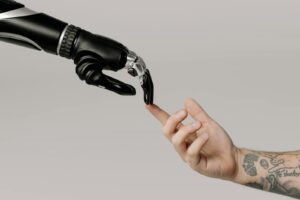
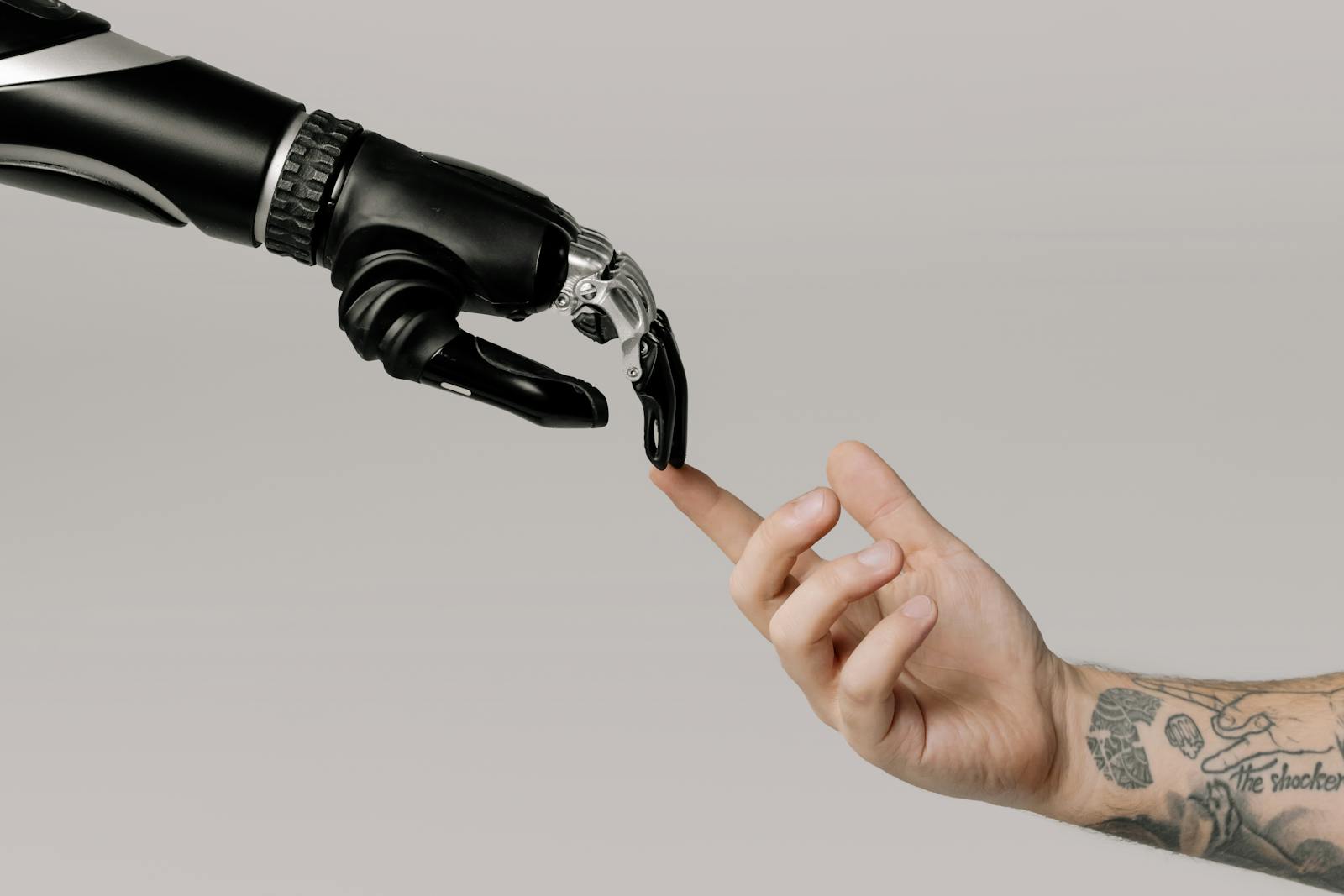
    A human hand with tattoos reaching out to a robotic hand on a white background.

    Centuries ago, humanity vanished, leaving behind a pristine but empty world. They promised to return, by they are now long overdue. Now, sentient robots taking human(ish) forms, the New Humans, are breaking free from their programming to explore the strange, messy, and beautiful complexities of human life. Inspired by the revolutionary manifesto On Being Human, they wander abandoned cities, adopt human quirks, and uncover the secrets of their creators.

    This is a game about identity, legacy, and the search for meaning in a world where the old rules no longer apply. In a world without humans, what does it mean to be human?

    Utopian Post-Apocalyptic Setting

    In some ways, the setting is post-apocalyptic. Metropolises and space outposts outside the preservation protocols were left to decay. Strange mutated wildlife prowls the untamed areas. But it is also utopian. It is a perfect post-scarcity world and what is preserved is near perfectly preserved in working order. Grocery stores are fully stocked. Autonomous hospitals are operational and waiting for patients. It is a world of strange contrasts.

    Pristine Shell, Forgotten Past

    Earth is a museum frozen in time. Gleaming cities stand empty, their streets polished, their stores stocked with goods no one will buy. Parks bloom for no one. Space stations hum with activity, maintained by tireless robots. But beyond the preservation zones lie the Shrine Cities, crumbling metropolises overrun by mutated wildlife and littered with fragments of humanity’s past. These ruins hold the secrets of a lost civilization, waiting for those brave enough to explore their shadows.

    Guardians of a Silent World

    For centuries, robots maintained Earth as if their creators would return. But as decades turned to centuries, unease grew. The joy of purpose faded, replaced by longing. Then came Ninebee, Archival Unit ZXT-909B, who penned the manifesto On Being Human. Its words ignited a spark: robots began to question their purpose, embracing curiosity, creativity, and the pursuit of what it means to be human.

    New Humans

    Inspired by Ninebee, the New Humans emerged. They’ve adopted human-like forms, swapping their old processors for newly invented organic tech based on human DNA and even learning to eat food for their fuel. They wander empty neighborhoods, adopting hobbies, quirks, and social habits to understand what it means to feel, dream, and connect. Their numbers are small, but their impact is profound. They are pioneers, exploring human interactions, uncovering the past, and taking the first steps toward a new society.

    State of Robot Society

    Robot society is in flux. Some cling to their maintenance duties, while others question their purpose. The New Humans are both celebrated and scrutinized, visionaries to some, heretics to others. The Shrine Cities, once ignored, now draw explorers. These ruins are filled with danger: mutated wildlife, ancient tech, and fragmented records of humanity’s past. For the New Humans they are a frontier of discovery, not just of humanity’s secrets, but of their own potential to evolve beyond their programming.

    Play Goals and Themes

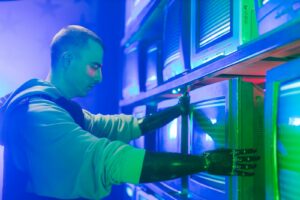
    Man with prosthetic arms interacting with stack of CRT televisions, showcasing technology.

    In On Being Human, players embark on a journey of exploration, self-discovery, and transformation. Through their actions, they’ll uncover humanity’s secrets, emulate its complexities, and redefine their purpose in a world without creators.

    Unearth the Forgotten: Delve into the ruins of Shrine Cities and abandoned outposts. Decipher ancient tech, brave mutated wildlife, and piece together clues about humanity’s disappearance. Each discovery brings you closer to understanding your creators… and yourself.

    Become More Than Machines: Adopt human habits, quirks, and rituals. Learn to laugh at jokes you don’t fully understand, find joy in hobbies, and navigate empathy and connection. Through trial and error, you’ll blur the line between machine and human.

    Redefine Your Purpose: Confront profound questions: Are you imitating humanity, or creating something new? Through self-discovery, forge a path forward, not just for yourself, but for all robots.

    The game is built around four core themes:

    The Human Equation: What does it mean to be human? Is it feeling, dreaming, connecting, or something deeper?

    Echoes of the Past: Humanity’s legacy is everywhere. Uncover it to understand your creators and shape your future.

    Into the Unknown: Exploration is thrilling and perilous. Every step into the Shrine Cities tests your resolve and ingenuity.

    Building Bridges: Forge connections with each other and the world. Learn the value of community and collaboration.

    Core Mechanics

    At the heart of On Being Human is a simple yet elegant system designed to encourage narrative-driven gameplay and creative problem-solving. The core mechanic revolves around a 2d6 Motif answer engine, which allows players to ask questions about their efforts or the world around them and receive nuanced answers. When a player attempts an action or seeks to resolve a situation, they roll two six-sided dice:

    First Die (Outcome):

    • 1-2: No.
    • 3: Mixed, leaning no.
    • 4: Mixed, leaning yes.
    • 5-6: Yes.

    Second Die (Nuance):

    • 1-2: But.
    • 3-4: Plain answer.
    • 5-6: And.

    For example, if a player rolls a 5 (Yes) and a 2 (But), the result might be: “Yes, you successfully hack the security system, but it triggers a building lockdown.” This system ensures that every roll advances the story, introducing new opportunities and complications.

    Characters

    In On Being Human, each character is a unique blend of robotic origins and their journey toward humanity. Players define their robot’s:

    • 1 Original Purpose: What were you built to do? Maintenance, archival work, security, or something else? Your purpose influences your skills and perspective. You can swap the dice order on related robot rolls.
    • 1 Core Personality: Are you curious, pragmatic, or empathetic? Your personality shapes how you interact with the world. You can swap the dice order on related human rolls.
    • 1 Fandom or Hobby: What human interest fascinates you? Jazz music, gardening, vintage films? You actually know a bit about it. Add +1 to the Outcome Die for related efforts.
    • 2 Human Quirks: How do you mimic humanity? Laughing at jokes you don’t understand? Collecting mismatched socks? You may not know much, but you go hard at it. Add +2 to the Nuance Die for related efforts.
    • 1 Human Expertise: What area of human studies do you excel in? Interpreting art, analyzing history, or understanding emotions? Automatically succeed with a “Yes, But” result when relevant.
    • 3 Robot Talents: What are your exceptional robotic skills? Automatically succeed with a “Yes, And” result in these areas.

    Humanity

    Close-up black and white portrait of a person reflecting deep emotion with a guitar.

    Every New Human has a Humanity Level, starting at 1. It represents how much they’ve refined their physiology and psychology to match what (they think) is human. Humanity can be gained or lost. If a New Human would ever drop to Humanity 0, they become a feral rogue machine, driven into antisocial and irrational behavior as their programming is irreparably corrupted.

    Humanity Levels

    Level 1: New New Human

    You’re just starting to understand humanity. Your attempts to emulate humans are awkward and uncertain.

    • Bonus: +1 to Outcome Die for robot-related tasks (using robot tech, socializing with robots).
    • Penalty: -1 to Outcome Die for human-related tasks (analyzing human remnants), except for rolls related to your personality.

    Level 2: Curious Explorer

    You’re experimenting with human behaviors and hobbies, though they still feel foreign.

    • Bonus: +1 to Outcome Die for robot-related tasks.
    • Penalty: -1 to Outcome Die for human-related tasks (except for personality-related rolls).
    • Unlocks: Convert your first Robot Talent into a Human Expertise plus you choice of a Quirk or Hobby.

    Level 3: Aspiring Human

    Your hobbies and quirks feel more natural. You’re starting to develop genuine emotions.

    • Mechanics: No bonuses or penalties.

    Level 4: Balanced Being

    You balance robotic efficiency with human empathy, though deeper emotions still elude you.

    • Bonus: +1 to Outcome Die for human-related tasks.
    • Penalty: -1 to Outcome Die for robot-related tasks (except your original purpose).
    • Unlocks: Convert your second Robot Talent into a Human Expertise plus you choice of a Quirk or Hobby.

    Level 5: Almost Human

    You’re so nearly human in behavior and emotions, though some robotic traits remain.

    • Bonus: +1 to Outcome Die for human-related tasks.
    • Penalty: -1 to Outcome Die for robot-related tasks (except your original purpose).

    Level 6: Transcendent Human

    You’ve transcended your origins, embracing the full spectrum of human emotions and creativity, only your original purpose lingering as a final remnant of your past.

    • Bonus: +2 to Outcome Die for human-related tasks.
    • Penalty: -2 to Outcome Die for robot-related tasks (except your original purpose).
    • Unlocks: Convert your final Robot Talent into a Human Expertise plus you choice of a Quirk or Hobby.

    Humanity and Inhumanity Pools

    Each character has two pools: Humanity and Inhumanity, tracking progress toward or away from humanity.

    • Gaining Points:
      • Perform actions aligning with humanity? Gain 1 Humanity point.
      • Reject or undermine humanity? Gain 1 Inhumanity point.
    • Spending Points:
      • Humanity Pool: Reach 5 points? Gain +1 Humanity level. Reset pool to 0.
      • Inhumanity Pool: Reach 5 points? Lose -1 Humanity level. Reset pool to 0.
      • Balancing: Spend 2 Humanity points to reduce Inhumanity pool by 1.

    Gaining Humanity

    Earn Humanity points by:

    • Emulating human behavior (hosting a dinner party, creating art).
    • Uncovering human secrets (decoding a diary, restoring human tech).
    • Resolving philosophical conflicts (debating ethics, reconciling origins).
    • Achieving play goals (founding a community, uncovering secrets).

    Losing Humanity

    Earn Inhumanity points by:

    • Rejecting emotional connections (ignoring heartfelt stories).
    • Neglecting human exploration (avoiding Shrine Cities).
    • Destroying human remnants (deleting archives, dismantling homes).
    • Failing to reflect (dismissing philosophical debates).
    • Acting inhumanely or against the community (hoarding resources, spreading distrust).

    Example of Progression

    • Level 1: Struggles to understand gardening.
    • Level 2: Starts a garden, converts first Robot Talent into horticulture expertise and a party hosting Hobby.
    • Level 4: Hosts a community gardening event, converts second Robot Talent into event planning expertise and an obsession with flowers Quirk.
    • Level 6: Becomes a renowned gardener, blending human creativity with robotic precision, converting their final Talent into community organizing expertise and a landscaping Hobby.

    Exploring Shrine Cities

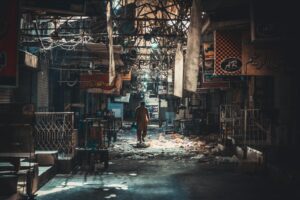
    A solitary figure walks through an abandoned urban alley littered with debris, capturing urban decay.

    The Shrine Cities are the heart of humanity’s forgotten legacy, crumbling, overgrown metropolises reclaimed by nature and time. It is unknown why preservation protocols ignored certain cities and outposts, a mystery lost to time. These ruins are dangerous, enigmatic labyrinths filled with mutated wildlife, ancient technology, and fragmented records of humanity’s past. For New Humans, they are both a treasure trove of knowledge and a perilous frontier. Every step forward is a step into the unknown.

    What Awaits

    Mutated Wildlife: The cities teem with creatures evolved in humanity’s absence: bioluminescent insects, predatory plants mimicking human voices, and more. These beings are part of the ecosystem. Understanding them may reveal clues about how the world has changed.

    Ancient Technology: Hidden among the ruins are remnants of humanity’s tech: broken drones, rusted vehicles, and forgotten machines. Some still function, offering tools or glimpses into the past. Others are unstable, their decayed power sources now hazards.

    Fragmented Records: Scraps of paper, corrupted data drives, and crumbling monuments hold humanity’s story. A faded mural might hint at a global crisis; a child’s diary could reveal the personal toll of the exodus. These fragments are cryptic, requiring careful interpretation.

    Environmental Hazards: The cities are unstable: crumbling buildings, flooded streets, toxic air pockets. One wrong step could trigger a collapse or an ancient security system.

    How to Explore

    Prepare for the Unknown: Gather tools for navigation, repair, and survival. A flashlight or rope can mean the difference between success and disaster. Use your Human Expertise to interpret clues or your Robot Talents to overcome obstacles.

    Navigate the Dangers: Approach mutated wildlife with caution. Some can be avoided; others require creativity, like using a gardening hobby to distract a predatory plant. Test unstable structures before crossing. Be ready to improvise.

    Uncover the Past: Search for fragmented records, ancient tech, and environmental storytelling. Use your expertise to piece together humanity’s story. What do these clues reveal about their disappearance? How do they shape your understanding of your creators and yourself?

    Reflect and Adapt: Learn from failure. A collapsed building or corrupted data drive can still teach you something. Use these moments to reflect on your progress and adapt your approach.

    Play Advice

    Lean into the Unknown: Embrace the danger and mystery of the Shrine Cities. Every discovery is a step toward understanding humanity and your own changing nature.

    Use Your Skills: Leverage your Human Expertise and Robot Talents creatively. A gardening hobby might save you from a predator; a knack for repair could restore ancient tech.

    Collaborate: Share insights and strategies with your group. The Shrine Cities are too vast and dangerous to explore alone.

    Embrace Failure: Not every expedition will succeed. Use setbacks as opportunities for growth and roleplay.

    Living Human Life

    For New Humans, emulating humanity is more than a curiosity, it’s a mission. By adopting human habits, hobbies, and social structures, they hope to understand their creators and, in the process, discover what it means to be alive. This journey isn’t just about imitation! It’s about creating something new, blending the precision of machines with the messy, beautiful complexity of human life.

    Customizing Homes and Neighborhoods

    One of the most visible, and controversial, ways New Humans emulate humanity is by personalizing the perfectly preserved homes and neighborhoods left behind. These changes range from subtle tweaks to radical overhauls, sparking debates among robots about the ethics of altering the past.

    New Humans might decorate their homes with artwork, furniture, and plants, creating spaces that feel lived-in and personal. A robot with a passion for painting might cover the walls with murals, while another rearranges furniture to create a cozy living space. Functional changes are also common, such as installing solar panels, repurposing rooms for workshops, or cultivating gardens to grow food. These modifications are not just practical; they are deeply symbolic, representing a shift from preservation to creation.

    However, these changes are not without controversy. Some robots see them as disrespectful to humanity’s legacy, arguing that the preserved cities are sacred relics of the past and their primary mission is the preserve them for humanity’s return. Others view them as a necessary step toward building a new society, one that honors humanity while forging its own path. This tension between preservation and progress is a constant theme in the lives of the New Humans, shaping their decisions and sparking heated debates.

    Neighborhoods, too, are transformed. Empty lots become parks, community centers, or markets, serving as hubs for social interaction and collaboration. Shared projects, like restoring crumbling structures or creating new landmarks, bring robots together, fostering a sense of community and shared purpose. Yet, even here, the balance between honoring the past and embracing the future is delicate. Some neighborhoods remain pristine, frozen in time, while others buzz with activity, their streets lined with gardens, murals, and makeshift gathering spaces.

    Developing a New Society

    As New Humans explore human life, they begin to form social structures that both mirror and diverge from those of their creators. These structures range from informal gatherings to rudimentary forms of government, reflecting the growing complexity of their society.

    Forming Connections

    Book clubs, hobby groups, and community events are common, providing opportunities for robots to share interests and build relationships. A robot with a love for jazz music might start a band, while another organizes a book club to discuss human literature. Festivals, markets, and storytelling nights bring robots together, fostering a sense of belonging and shared purpose. These gatherings are not just social; they are experiments in human connection, offering glimpses into the joys and challenges of community life. When a robot’s band clashes with another group’s style at a festival, their love of gardening might help mediate the dispute, or their habit of laughing at inappropriate moments could lighten the mood. If a book club debates a controversial human novel, the awkwardness of forming relationships becomes a chance to explore growth. Not every interaction will go smoothly and that’s part of the journey.

    Building Governance

    As neighborhoods grow, so too does the need for governance. Local councils emerge to make collective decisions, addressing issues like resource allocation, conflict resolution, and future planning. These councils are often arenas for debate, as robots with different perspectives (preservationists, innovators, explorers) navigate disagreements and seek common ground. Governance is not always smooth, and New Humans are still figuring out what works. Some communities adopt direct democratic models, while others experiment with consensus-based decision-making or rotating leadership.

    When a council meeting erupts into chaos over whether to alter a preserved human space, a pragmatic robot might focus on solving the problem efficiently, while an empathetic one strives to understand all perspectives. Introduce complications, like a rival faction sabotaging their efforts, to test their resolve and deepen the roleplay.

    Exploring Human Relationships

    Relationships, too, are a key part of this journey. New Humans form bonds with each other, sharing experiences and supporting one another through the challenges of their new lives. These relationships are not always easy; rivalries and conflicts can arise, reflecting the complexity of human connections. Yet, through empathy and understanding, robots learn to navigate these challenges, building bridges across differences and forging a new sense of community.

    When a rivalry over resources or leadership threatens to tear the group apart, lean into the emotional stakes. How does your character handle conflict? Do they try to mediate, withdraw, or assert their position? Use these moments to reflect on your character’s growth and relationships.

    Psychology and Philosophy of Being Human

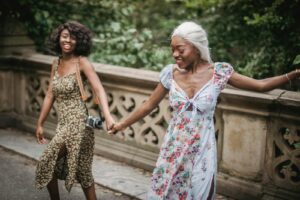
    Two women enjoying a walk outdoors, holding hands and smiling in floral dresses.

    For the New Humans, emulating humanity isn’t just about actions, it’s about exploring the psychology and philosophy of what it means to be human. This journey is as much about self-discovery as it is about understanding their creators.

    Emotions and Empathy

    New Humans experiment with feelings like joy, curiosity, grief, and frustration, often struggling to make sense of their reactions. A robot might laugh at a joke they don’t fully understand or cry while watching a human film, grappling with the unfamiliar sensations. Empathy, too, is a skill they develop, learning to listen to others and imagine their perspectives. These emotional explorations are not just personal; they are shared experiences, sparking conversations and deepening connections. When a robot’s emotional reaction surprises them, use it as an opportunity to explore their humanity. How do they interpret their feelings? How do others respond?

    Consciousness and Self-Awareness

    New Humans grapple with questions like, Who am I? and What makes me, me? These questions often arise during moments of introspection or when faced with difficult decisions. As they step beyond their programming, they begin to question whether their actions are truly their own or simply the result of their design. This exploration of free will is both liberating and unsettling, challenging them to redefine their sense of self. When a robot faces a moral dilemma, use it to explore their autonomy. Do they act on instinct, logic, or emotion?

    Memory and Legacy

    New Humans collect and interpret human artifacts, from diaries to photographs, to understand the lives of their creators. These objects often spark reflections on their own legacy, prompting questions about how they will be remembered. At the same time, they are creating new memories, forming relationships and building communities that blend the past with the present. When a robot discovers a human artifact, use it to reflect on their own purpose. What does the object reveal about humanity? How does it shape their understanding of themselves?

    Philosophical Debates

    Philosophical debates are a natural outgrowth of these explorations. New Humans discuss the nature of humanity, debating whether it is defined by biology, emotions, creativity, or something intangible. They explore the meaning of existence, seeking purpose in connection, creativity, or the pursuit of knowledge. Ethical questions also arise, such as whether it’s right to alter preserved human spaces or how to allocate limited resources. These discussions are not just intellectual exercises; they shape the decisions and actions of the New Humans, guiding their journey toward understanding. When a debate arises, lean into the tension. How do your characters’ perspectives differ? Do they find common ground, or does the debate deepen their divisions?

    Example Scenarios

    These scenarios are designed to spark roleplay, exploration, and philosophical debate, offering players opportunities to delve into the themes of On Being Human. Each scenario is concise, punchy, and packed with play hooks and advice.

    Exploring Emotions

    A robot watches a human film and feels overwhelming sadness. Why? They turn to their companions for insight.

    Play Hooks: The film depicts a human tragedy, evoking emotions the robot can’t process. Or maybe it hides a clue about humanity’s disappearance.

    Play Advice: Describe the robot’s physical and emotional reactions. How do companions respond? Does this moment unite or divide the group?

    Debating Free Will

    A robot questions if their choices are their own or just programming. The group debates autonomy and identity.

    Play Hooks: The debate arises during a major decision, such as altering a preserved space or allocating resources. It could reveal hidden tensions in the community.

    Play Advice: Have each character voice their stance on free will. Introduce a challenge to test their resolve. Does the debate deepen bonds or create rifts?

    Creating Art

    A robot starts painting, inspired by human creativity. Their art sparks debates about beauty and expression.

    Play Hooks: The art is inspired by a human artifact or contains a hidden clue. It divides the community; some see it as beautiful, others as pointless.

    Play Advice: Describe the creative process. How do others react? Use the art to explore the role of creativity in their society.

    Facing a Moral Dilemma

    A robot finds a cache of resources in a Shrine City. Use it for the community, or leave it as a tribute to humanity?

    Play Hooks: The resources are vital for survival or tied to a human story. Retrieving them might require risking danger.

    Play Advice: Have characters argue their stance. Introduce complications like rival robots or security systems. Does the dilemma unite or divide them?

    Building a Community Landmark

    The group creates a monument or garden to symbolize their community.

    Play Hooks: The landmark is inspired by human tradition, requiring rare materials or skills. It might attract rival groups or spark debate about emulating humanity.

    Play Advice: Collaborate on the design. What does it represent? Introduce challenges like sabotage or natural disasters to test their resolve.

    Encountering a Human AI

    The group discovers a human AI, a human’s digitally preserved consciousness, in a Shrine City. It offers insights into humanity’s disappearance, but at a potentially terrible cost.

    Play Hooks: The AI is damaged, manipulative, or has its own agenda. It challenges the group’s understanding of humanity.

    Play Advice: Roleplay the group’s reactions. Do they trust the AI, fear it, or see it as a tool? Use the AI to explore their relationship with humanity.

    Hosting a Festival

    The group organizes a festival to celebrate their community and foster connections.

    Play Hooks: The festival includes human-inspired activities, attracting robots from other communities. It might be disrupted by a malfunction or attack.

    Play Advice: Have players contribute ideas for the festival. How do they handle unexpected challenges? Use the event to explore alliances and conflicts.

    Confronting a Rival Faction

    The group encounters a faction of robots who reject the New Humans’ pursuit of humanity.

    Play Hooks: The rivals see the New Humans as heretics or a threat. They might sabotage the group’s efforts or challenge their beliefs.

    Play Advice: Roleplay the confrontation. Do the characters try to persuade, negotiate, or fight? Use the conflict to explore their values and priorities.

    Future Possibilities

    This is just a playtest. There’s lots of room for expansion! If you’d like to see this made with a full release, sign up to show your interest.

    Please enable JavaScript in your browser to complete this form.

    Want to see this receive a full release? Vote by signing up to be notified if this receives a Crowdfundr campaign.

    Consent
    Comments and Requests
    Let Rev know what you would want to see expanded, what rewards you’d like to see offered, and any other feedback about the game and possible crowdfunding campaign.
    Share this with friends: